

Full article
Published 12/10/2026
Could a genuine business need still lead to a challenged dismissal if the process is rushed or poorly documented? Redundancy process advice for employers should focus on more than the final decision. A role may no longer be needed, but employers still need to distinguish redundancy from performance or conduct concerns, explain the proposal and give affected employees a meaningful opportunity to respond. The sequence of steps, selection criteria and records all matter.
A clear checklist can make the process easier to manage. This guide covers how to assess the business case, consider alternatives, plan consultation, apply fair selection criteria and keep reliable records. It also explains when specialist employment-law input may help, particularly before a difficult decision is finalised. Barristers Direct arranges paid consultations with specialist barristers, who provide advice directly to the client. Use the steps below to organise your decisions and explain how you reached them.
Key Takeaways
- Record the business change behind the proposal and check whether the role itself is affected, rather than using redundancy to address an individual issue.
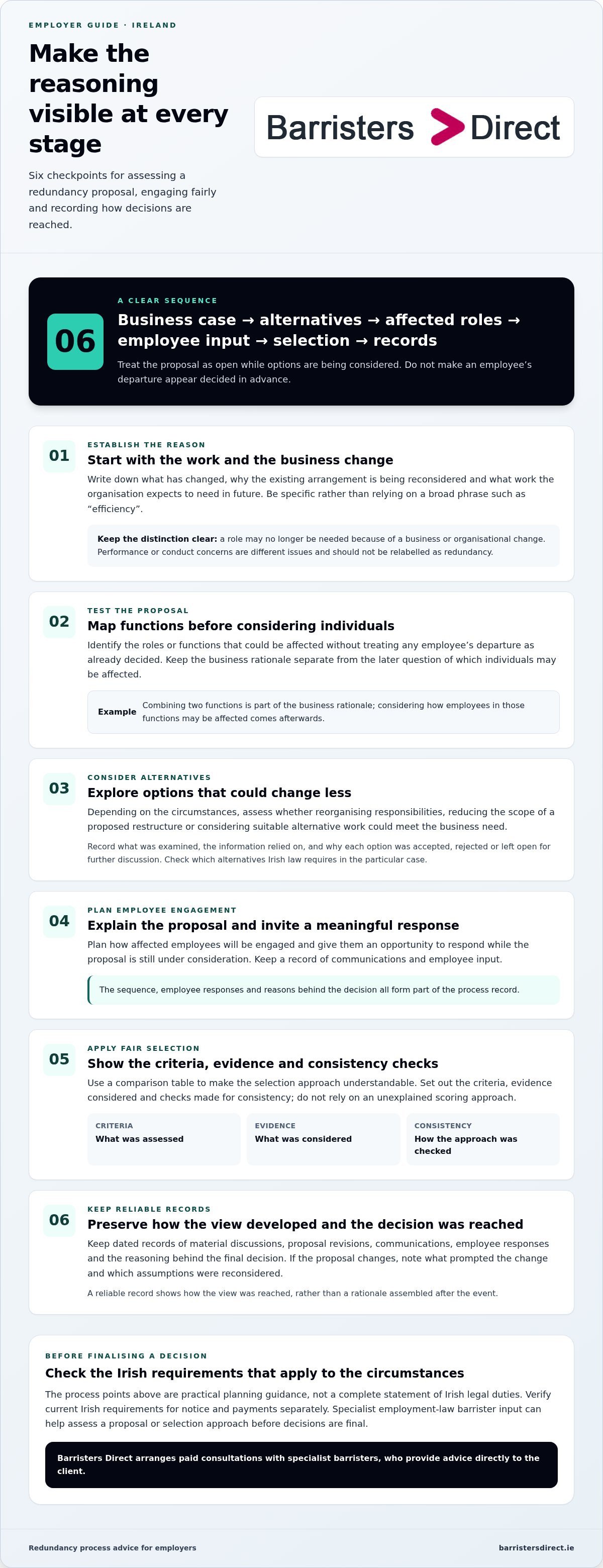
- Map out the proposed sequence: document the case, explore alternatives, identify affected roles and plan employee engagement.
- Use a comparison table to show the selection criteria, evidence considered and consistency checks. Don’t rely on an unexplained scoring approach.
- Keep a clear record of communications, employee responses and the reasoning behind the final decision. Check current Irish requirements for notice and payments separately.
- Use redundancy process advice for employers to identify when specialist employment-law input could help assess a proposal or selection approach before decisions are final.
Table of Contents
- Redundancy Process Advice for Employers in Ireland: Start with the Reason
- Irish Redundancy Process: Test the Business Case and Consider Alternatives
- Redundancy Selection and Consultation in Ireland: Make Decisions Fairly
- Employer Redundancy Checklist: Records, Communication and Final Steps
- When to Seek Specialist Irish Employment Advice on Redundancy
Redundancy Process Advice for Employers in Ireland: Start with the Reason
Is the role genuinely no longer required, or is another workplace issue driving the proposed dismissal? Answer this before identifying who might be affected. A redundancy proposal should be based on a business or organisational change, such as a restructure that removes a function or a lasting reduction in the need for particular work. If the concern is an employee’s performance or conduct, that is a different issue and should not be relabelled as redundancy.
Business rationale: the operational change being considered and why it may mean certain work or roles are no longer needed.
Decision-making process: how the employer examines the proposal, identifies potentially affected roles, considers employee input and reaches a decision.
In plain English, redundancy is a business-led change in which a role may no longer be needed, rather than a decision about an individual’s conduct or performance. This is a practical description, not a complete statement of the Irish statutory test. Check the legal tests and obligations that apply to the specific circumstances against current Irish law. UK guidance may provide general background, but it should not be treated as the rules for an Irish workplace. The broad international overview in Redundancy (employment)) can provide context, not a substitute for Irish-specific advice.
What should employers establish before considering redundancies?
Write down the change prompting the proposal and the evidence supporting it. This might include a revised operating model, a decision to stop offering a particular service or a reorganisation that combines functions. Explain what has changed, why the existing arrangement is being reconsidered and what work the organisation expects to need in future. Be specific: a broad statement about “efficiency” may not explain the proposal clearly.
Next, identify the roles or functions that could be affected, without treating any employee’s departure as already decided. Keep this mapping exercise separate from the later question of which individuals might be affected. For example, combining two functions is part of the business rationale; deciding how employees in those functions may be affected is a subsequent step. Keeping the questions distinct makes the reasoning easier to examine and communicate.
Is redundancy the right route for the problem?
Establish whether the underlying concern relates to the work itself, a particular employee or another workplace change. If the work remains necessary but the concern is an individual’s conduct or performance, redundancy may not accurately describe the issue. Using that label without a genuine role-based rationale can expose the employer to legal challenge and damage trust, particularly if the stated business case does not match the evidence or the decisions made.
If an individual employment issue needs separate assessment, specialist input can help clarify the relevant considerations before you proceed. Barristers Direct arranges paid consultations with specialist employment-law barristers, who provide advice directly to the client. The employment law consultation information explains this route. Sound redundancy process advice for employers starts with testing the reason honestly and keeping the business case distinct from the process used to reach decisions.
Irish Redundancy Process: Test the Business Case and Consider Alternatives
Once you have recorded a proposal, test whether the intended change addresses the business need and whether practical alternatives exist. A clear sequence keeps the reasoning visible: document what is proposed, examine other options, identify potentially affected roles, then plan how to engage with employees. These are planning steps, not a complete statement of Irish legal duties. Requirements depend on the circumstances, so verify the current Irish rules before making decisions.
How can an employer document the business rationale?
Prepare a short, factual proposal explaining the business context, the change under consideration and the roles or functions that could be affected. Use information available at the time, such as an approved restructure proposal or a change in the work the organisation expects to carry out. Make clear that it is a proposal while options remain open. Avoid notes that imply a particular employee’s departure is already decided, as this can undermine confidence in the process.
Keep a dated record of material discussions and revisions. If the proposal changes, note what prompted the change and which assumptions have been reconsidered. This creates a reliable account of how you reached your view, rather than a rationale assembled after the event.
Which alternatives should be considered before final decisions?
Explore options that could meet the business need while changing less. Depending on the circumstances, these might include reorganising responsibilities, reducing the scope of a proposed restructure or considering whether suitable alternative work exists. These are practical options to assess, not a substitute for checking which alternatives Irish law requires an employer to consider in a particular case.
For each option, record what you examined, the information relied on and why it was accepted, rejected or left open for further discussion. For example, if combining two functions is proposed, note whether redistributing some tasks could meet the same need and why you consider that workable or not. If suitable alternative work is considered, document which roles were reviewed and the basis for your conclusion, subject to checking the applicable legal requirements.
How should the process move from proposal to engagement?
Identify potentially affected roles after examining the proposal and alternatives. Then plan how to explain the proposal and invite meaningful engagement before reaching a final decision. Keep the supporting records together, including the business case, alternatives considered, key assumptions and reasons for any changes. This makes it easier to give consistent explanations and distinguish an open proposal from a settled outcome.
A documented rationale and genuine consideration of alternatives help employers make decisions they can explain and review. This discipline supports sound decision-making, but does not itself establish that every legal obligation has been met. Complex restructures, several potentially affected roles or uncertainty about the applicable Irish framework are reasons to seek specialist employment-law input early. Advice can focus on the actual proposal and records; it does not replace a fair process or guarantee a particular outcome.
If specialist input would help you test the proposal before it advances, Barristers Direct can connect you with a barrister for employment-law advice. Effective redundancy process advice for employers keeps the business case, options considered and next steps clear and properly documented.
Redundancy Selection and Consultation in Ireland: Make Decisions Fairly
Where a proposal may affect some employees but not others, the employer needs a fair, explainable way to assess the situation. Criteria should relate to the proposed business change, be applied consistently to comparable employees and be supported by evidence. The precise legal requirements depend on the circumstances. Check the applicable Irish employment and equality rules rather than importing procedures from another jurisdiction.
How should employers approach selection criteria?
Start by identifying what the proposed change requires from the roles that will remain. Criteria might relate to relevant skills or experience, but they should reflect the work in question and allow evidence-based assessment. Avoid choosing criteria simply because they favour a preferred outcome. If criteria are unclear, or differ between comparable employees without a sound reason, the decision may be difficult to explain.
A comparison table can make the reasoning easier to review. It need not use a prescribed scoring method. Instead, set out each proposed criterion, the evidence considered, how it was applied to each comparable role and any consistency checks. Keep notes explaining the assessment, including how gaps in evidence were handled. Before relying on a criterion, check current Irish requirements, including any restrictions that may apply to particular situations or groups.
What should consultation achieve?
Consultation should give affected employees a genuine opportunity to understand the proposal and respond while it remains open to consideration. Explain the business change, the proposed selection approach and information relevant to the employee’s situation in clear terms. Allow time for questions and for the employee to raise alternatives or provide information that could affect the assessment.
Consider the response before reaching a final decision. Record the points raised, any further enquiries made and whether the proposal or assessment changed as a result. Consultation is not simply delivering a prepared script or confirming a decision already made. Who must be consulted, the form consultation must take and when it must occur depend on the specific circumstances. Verify whether individual or collective consultation requirements apply under current Irish law.
How can employers check for inconsistent or discriminatory effects?
Review the evidence side by side. Ask whether employees were assessed against the same criteria, whether the information is comparable and whether any departure from the common approach has a clear explanation. Consider whether a criterion could disadvantage a protected group, even if that was not the intention. Check the relevant legal tests and any selection restrictions against current Irish requirements before finalising decisions.
Consistent criteria need an evidence trail and careful review for unfair or discriminatory effects. Record the checks undertaken, concerns identified and how those concerns influenced the decision. If an employee raises an individual legal issue, specialist input can help assess it in context. Barristers Direct arranges paid consultations with specialist barristers, who provide advice directly to the client. Learn more about specialist employment-law advice. Careful records support the process, but do not replace meaningful engagement or a proper review of the applicable Irish rules.
Employer Redundancy Checklist: Records, Communication and Final Steps
A well-organised file helps an employer explain what was proposed, what employees were told and how the decision developed. Keep records factual, dated and easy to follow. The aim is not paperwork for its own sake. The documents should reflect the actual process and allow someone else to understand the reasoning later.
Which records should an employer organise?
Keep the business proposal and its versions together with supporting evidence, alternatives considered, selection material and decision records. Add consultation invitations and correspondence, employee responses, meeting notes and a record of how relevant points were considered. Store related items consistently so the reasoning can be traced from proposal through to final decision.
A document checklist can assign responsibility and show progress without setting arbitrary deadlines:
- Proposal and business evidence: record the change and its basis; assign an owner and mark the completion status.
- Alternatives and role information: capture options explored and potentially affected roles; assign an owner and mark the completion status.
- Employee communications and responses: retain what was shared and raised; assign an owner and mark the completion status.
- Selection and final decision records: show the evidence reviewed and reasoning reached; assign an owner and mark the completion status.
Keep employee information secure and limit access to people who need it for their role. Follow the organisation’s applicable record-handling practices and obtain advice if you are unsure what should be retained or who may access it.
What should communications explain?
Use direct, respectful language. Explain the proposal, why the employee may be affected, how they can respond and what stage follows. If the proposal is still open, say so plainly; do not describe it as a completed decision. After engagement, communicate the outcome accurately and explain the reasoning without making broader legal claims than you can support.
Check that letters, meeting notes and internal records tell a consistent story. If the proposal changes after an employee raises new information, update the relevant records and explain the change. Clear communication supports trust, but it must reflect what actually happened.
What needs a final legal and process review?
Before finalising matters, separate process checks from employee entitlements. Verify current Irish requirements for notice, redundancy payments, any notification duties and any applicable appeal arrangements. Do not rely on a checklist alone for statutory figures, thresholds or deadlines. Check these against authoritative, current Irish sources and the facts of the case.
Then check that the records support the stated rationale, relevant employee responses were considered and communications match the outcome. If a point remains uncertain, specialist advice can help assess the documentation and proposed next step. For support from a specialist employment-law barrister, arrange access to employment-law advice through Barristers Direct.
When to Seek Specialist Irish Employment Advice on Redundancy
Specialist input can be useful before a redundancy decision is final, while there is still an opportunity to review the proposal and address gaps in the process. Consider seeking advice if the business rationale is difficult to distinguish from an individual employment issue, the proposed selection approach raises questions or you are unsure which consultation obligations apply. Early review can help focus next steps on the facts and the relevant Irish legal framework.
Which redundancy issues may merit specialist review?
Some situations call for closer scrutiny than a straightforward change affecting one clearly defined role. A complex restructure, multiple potentially affected roles, proposed collective redundancies or concerns about equality impacts may raise questions about the applicable process. Requirements depend on the circumstances, so verify current Irish law rather than relying on rules or templates developed for another jurisdiction.
Advice can help you understand the issues, assess available options and identify what further information may be needed. It cannot guarantee a particular outcome or remove the employer’s responsibility to run a fair process. If decisions remain open, a focused review may help you address concerns before they become harder to resolve.
What does a Barristers Direct consultation involve?
Barristers Direct arranges a paid consultation with a barrister whose expertise matches the employment-law issue. The consultation can take place online or by telephone. The barrister provides advice directly to you; any further work or professional relationship is agreed between you and the barrister, not with the platform.
To make the discussion productive, prepare a concise summary of the proposed change, the stage reached and the questions you need answered. Bring relevant records, such as the proposal, selection material, communications and notes of employee responses. Be clear about what remains undecided. This helps the barrister focus on the specific process or decision you want reviewed, rather than a general account without supporting context.
How can an employer take the next step?
Start by listing the points you need to resolve. For example: does the documented rationale support the proposed change, are the selection criteria suitable for the roles being compared, and what consultation or notification requirements may apply? Keep employee information to what is relevant to the advice sought. A well-defined question can make the consultation more focused.
If you are weighing up whether specialist input would help, explore specialist employment-law consultations and consider which proposal documents or process concerns you want to discuss. The aim is informed decision-making, not a promised result. Sound redundancy process advice for employers depends on applying the relevant law to the facts and maintaining a fair, evidence-based process.
For access to specialist legal expertise on your redundancy proposal, arrange access to specialist legal expertise.
Make Your Next Decision With Confidence
A redundancy proposal can evolve as new information emerges. Build in a review point before decisions become final. Ask whether the rationale still reflects the business need and whether anything raised during engagement changes the picture. This keeps the process responsive rather than treating the original plan as fixed.
Use this checklist as a working document, not a substitute for advice on the specific facts. If a key question remains unresolved, addressing it early can help you decide what to do next with greater clarity. Good redundancy process advice for employers should be grounded in the current Irish legal framework and the evidence available in your organisation.
Barristers Direct matches clients with a barrister based on the relevant area of law. Any advice or further engagement is directly between the employer and barrister. Arrange access to specialist employment-law expertise to discuss the issues affecting your proposed process. With a considered approach and specialist expertise, you can move forward with greater confidence.
Frequently Asked Questions
Can an employer make a role redundant and recruit for it again?
Possibly, but recruiting for substantially the same role soon after a redundancy may raise questions about whether the original business rationale was genuine. The circumstances matter: duties, organisational needs or the proposed structure may have changed. Keep evidence of what prompted the redundancy and document any later change in the business position. If recruitment becomes necessary, review whether it affects the basis for the earlier decision and seek advice if the explanation is unclear.
Does an employer need to consult every employee individually about redundancy?
Meaningful consultation is expected with employees directly affected by a proposed redundancy, but the required arrangements depend on the circumstances. If collective redundancy rules apply, consultation with employee representatives and additional steps may be required. Do not assume a group meeting alone gives every affected employee an opportunity to understand and respond. Identify who may be affected, then verify current Irish consultation requirements and the appropriate process before communicating a final decision.
What happens if an employee rejects an alternative role during redundancy?
Rejecting an alternative role may affect an employee’s redundancy entitlements, depending on the role’s suitability and the reason for refusal. Avoid treating every refusal alike. Record the role offered, its terms and the employee’s explanation, then check the applicable Irish rules before deciding what follows. For example, a concern about changed responsibilities may need a different assessment from a refusal based on personal circumstances.
Can an employee challenge redundancy selection criteria in Ireland?
Yes. An employee may challenge a selection decision if they believe the criteria were applied inconsistently, lacked a sound basis or had an unfair or discriminatory effect. The employer should be able to explain the evidence and reasoning behind the assessment. An employee may have options to bring a workplace complaint, depending on the facts and applicable legal route. Keep the assessment records and obtain advice if a challenge is raised.
Is redundancy different from dismissal for performance or conduct?
Yes. Redundancy concerns a business change affecting the need for work or a role; performance or conduct concerns relate to an individual employee. The distinction matters because the reason given for dismissal should match the actual circumstances. If the work continues substantially unchanged and the concern is the employee’s behaviour or capability, calling the dismissal redundancy may expose the decision to challenge. Assess the issue on its facts before choosing a process.
How much redundancy pay must an employer provide in Ireland?
Eligible employees are entitled to statutory redundancy pay calculated as two weeks’ gross pay for each year of continuous service, plus one additional week. Eligibility includes being aged 16 or over and having at least 104 weeks of continuous service. Gross weekly pay is capped at €600 for this calculation. Enhanced payments may be separate. Check current Irish requirements and the employee’s service and pay details before calculating an amount due.
Can an employer pause or withdraw a redundancy proposal after consultation?
Yes. A proposal can be reconsidered or withdrawn if the business position changes or consultation brings forward information that alters the assessment. Explain the revised position clearly to affected employees and retain a record of why the proposal changed. If only part of the proposal is paused, clarify which elements remain under consideration. Before changing course, check whether specific Irish procedural or notification obligations apply to the circumstances.
Disclaimer
_This article does not constitute legal advice. Barristers Direct does not provide legal advice. To obtain legal advice, you should contact a legal practitioner._