

Full article
Published 09/11/2026
A demand for payment isn’t proof that you owe the money. If you dispute a debt in Ireland, tell the lender or debt collector in writing why you disagree, ask for documents that support the claim and keep copies of your correspondence. A very old debt may be statute barred, meaning the creditor is out of time to collect it.
It’s understandable to want a clear answer before responding to repeated demands or considering court action. This guide explains how to set out your position, request evidence such as account details and the basis for the amount claimed, and keep a useful record of what happens next.
You’ll also learn how to complain through the lender’s complaints process, what to consider if the response doesn’t resolve the issue, and why seeking legal advice before court proceedings can help you understand your position and options.
Key Takeaways
- Set out clearly why you dispute the amount or liability, and keep copies of your letters and a dated record of communications.
- Ask the lender or debt collector for documents that show how the debt arose and how the amount was calculated.
- Review the lender’s complaints process and relevant dispute resolution route if its response doesn’t resolve your concerns.
- Get legal advice before court proceedings so you can understand the evidence, risks and options available to you.
- Clear credit controls and regularly reviewed trade terms can help businesses reduce the risk of future payment disputes.
Table of Contents
- What to do if I dispute a debt?
- Telling a lender or debt collector that you dispute a debt
- Getting legal advice before court proceedings
- Requesting proof of a debt
- What are the time limits for disputing a debt or challenging court action in Ireland?
- Barristers Direct: Commercial Dispute Resolution
What to do if I dispute a debt?
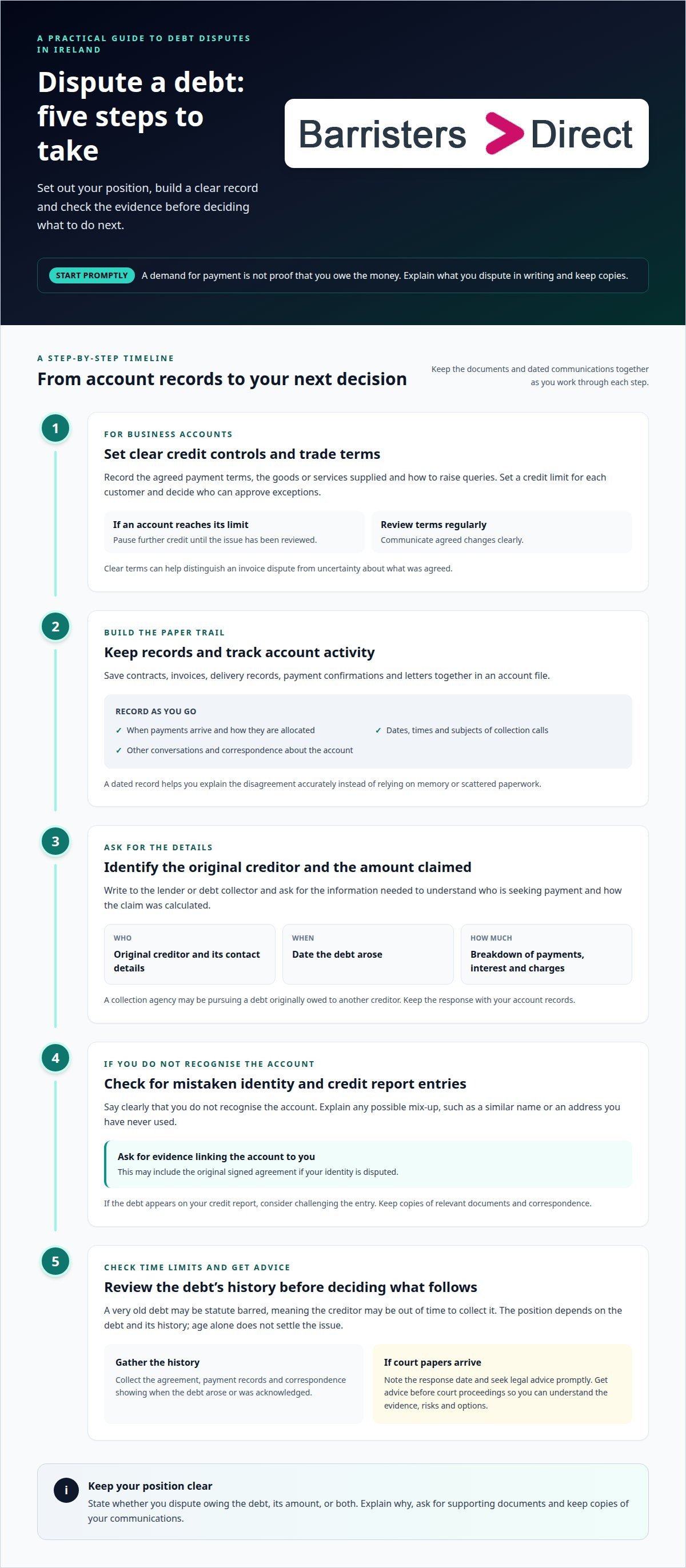
Act promptly, state your position in writing and keep a complete record. If you manage customer accounts, clear credit controls and trade terms can also help prevent avoidable disputes.
- Set clear credit controls and trade terms. For a business account, record the agreed payment terms, the goods or services supplied and how to raise queries. Set a credit limit for each customer and decide who can approve exceptions. If an account reaches its limit, pause further credit until the issue has been reviewed. Review trade terms regularly and communicate agreed changes clearly. These steps help distinguish a dispute about an invoice from uncertainty about what was agreed.
- Keep records and track account activity. Save contracts, invoices, delivery records, payment confirmations and letters together in an account file. Record when payments arrive and how they are allocated, especially if a customer questions interest or charges. Note the dates, times and subjects of collection calls and other conversations. A dated record helps you explain the dispute accurately instead of relying on memory or scattered paperwork.
3.
Request the original creditor’s details
Ask the lender or debt collector in writing to identify the original creditor and provide its contact details. Request the date the debt arose, the amount claimed and a breakdown of payments, interest and charges. A collection agency may be pursuing a debt originally owed to another creditor, so establish who is seeking payment now and who first provided the credit. Keep the response with your account records.
4.
Check for mistaken identity and credit reports
If you don’t recognise the account, say so clearly and explain any possible identity mix-up, such as a similar name or an address you’ve never used. Ask for evidence linking the account to you, including the original signed agreement if your identity is disputed. If the debt appears on your credit report, consider challenging the entry and keep copies of relevant documents and correspondence.
5.
Check the time limits
Check promptly whether a very old debt may be statute barred. This means the creditor may be out of time to collect it, but the position depends on the debt and its history. Gather the agreement, payment records and correspondence showing when the debt arose or was acknowledged. Don’t assume age alone settles the issue. If court papers arrive, note the response date and seek legal advice promptly.
Telling a lender or debt collector that you dispute a debt
Write to the lender or collector, explain what you dispute and keep the exchange focused. Ignoring a debt collection letter may lead to further collection attempts and an incorrect entry on your credit file. Silence won’t resolve the disagreement.
1.
Tell the lender or collector about the dispute
Send a dated letter or email to the lender or debt collector named in the notice. Identify the account and state whether you dispute owing the debt, its amount, or both. Briefly explain why, such as a payment not being credited or an account you don’t recognise. Include relevant supporting details, but avoid admitting liability if you’re unsure the debt is yours. Keep a copy and proof of delivery.
- Check who is contacting you. A collection agency may have taken over collection of a debt originally owed to another creditor. Ask the agency to identify itself, name the original creditor and explain its authority to collect. Send your dispute to the party contacting you, and keep the original creditor’s details with its response. This helps ensure your letter reaches the right party and isn’t treated as a general query.
3.
Deal with collection activity
State in your letter that you dispute the debt and ask the collector to pause contact while it considers your points. Don’t assume that disputing a debt automatically stops collection in Ireland. The collector may continue contacting you, including after providing account information. If contact continues, record when it happened, who contacted you and what was said, then refer to that record in your next written communication.
4.
Complain about debt collectors
If you’re concerned about a collector’s conduct, complain in writing to the responsible lender or agency. Describe specific incidents, such as repeated calls after you requested written communication, and include dates and copies of relevant messages. Ask for a written response explaining how the complaint will be handled. Keep this complaint separate from your explanation of why the account or amount is disputed.
- Review the response and decide your next step. The lender or collector may provide account information, explain its position, correct an error or reject your dispute. Compare its response with the point you raised, and write back if it hasn’t addressed that issue. If the lender’s complaints process doesn’t resolve your concern, ask what further complaint route applies to your account. For a complex disagreement, legal guidance for resolving disputes can help you assess the next step.
Getting legal advice before court proceedings
Seek legal advice before issuing proceedings in the District Court or High Court. A consumer’s case may turn on the agreement, payment history and evidence supporting each disputed point.
- Organise the case documents before seeking advice. Gather the original agreement, account statements, invoices, payment records and letters from the creditor or collector. Put them in date order and mark the entries you challenge. For example, identify a payment that appears to be missing or interest you can’t reconcile. Include any complaint and the lender’s response. A barrister or solicitor can then assess the evidence and explain how it affects your position, rather than relying on a general account of events.
- Ask for advice before deciding whether to issue proceedings. The court route depends on the claim, the evidence and the outcome you seek. Ask a legal professional to assess who owes what, whether the documents support your position and what arguments the other party may raise. Discuss the practical steps involved in bringing or defending a claim in the District Court or High Court. If the other party has threatened proceedings, show the letter and any stated dates promptly. Don’t mistake a threat for a court order, but don’t ignore formal court papers.
- Separate the legal dispute from your ability to pay. If you accept that some amount is due but can’t manage the requested payments, prepare a clear account of your income, essential spending and existing commitments. A budget advice service can help organise those figures and identify what you can realistically afford. This information may help you discuss a payment proposal, but affordability does not by itself determine whether the debt is legally owed. Ask whether debt advice is free before relying on it, and keep repayment advice separate from advice on liability.
- Use the advice to choose a proportionate next step. After reviewing the documents, ask the legal professional to explain the strengths and weaknesses of your position, what evidence is still needed and what alternatives to court are available. A settlement discussion may resolve a disagreement without a hearing, but record any proposal and its terms in writing. If court action proceeds, follow the instructions and dates on the court documents. Keep your papers together, including new correspondence, so advice reflects the current position rather than an outdated account.
Requesting proof of a debt
Make a written request identifying the account and the evidence you need. For a disputed debt, ask for enough detail to check whether you’re liable and how the claimed balance was calculated.
- Make your request specific. Address it to the lender or collection agency handling the account. Include the account reference, your name and the specific point you dispute, such as the balance or who owes it. Ask for documents that support the claim, not just a general explanation. If the agency is collecting for another creditor, ask it to identify that creditor and explain the account history.
2.
Request a statement and charge breakdown
Ask for an account statement showing how the balance developed, with payments, principal, interest and charges listed separately. For a debt regulated by the Consumer Credit Act, the creditor is required to provide a full account statement and a list of added charges and interest. Compare each entry with your payment records. If a payment or adjustment is missing, identify its date and amount in a follow-up letter.
3.
Request evidence of liability
Ask for information linking the debt to you, including the original creditor’s name and contact details, the date the debt arose and the amount claimed. If you say the account isn’t yours because of identity theft or mistaken identity, request a copy of the original signed contract or note. Check names, addresses and account details for discrepancies, and explain each mismatch clearly.
- Check the documents against your own records. Match the statement’s opening balance with the agreement or earlier account correspondence. Then trace each payment and adjustment through to the balance now claimed. For example, if your bank record shows a payment that’s missing from the statement, send a copy of the relevant record and identify the entry you dispute. Keep original documents safe and send copies, not the only version.
- Follow up on missing or unclear evidence. If the response gives only a total, ask for an itemised account and the documents supporting the calculation. If the collector provides a contract but doesn’t explain the figures, request a separate breakdown of payments, interest and charges. Note which questions remain unanswered and send them together in one clear follow-up. A complete response should let you assess the creditor, the basis of liability and how the balance grew from the original amount to the sum now claimed. This evidence can clarify whether the disputed debt is yours and whether the amount is accurate.
What are the time limits for disputing a debt or challenging court action in Ireland?
Consider the age of the debt separately from any deadline in court papers. A very old debt may be statute barred, meaning the creditor is out of time to collect it.
- Check the debt’s age and history. Gather the agreement, statements, payment records and letters showing when the account arose. A debt may be statute barred, but its age alone doesn’t establish that. Relevant facts include the account history and any court judgment. If the original creditor and collection agency give different dates, ask them to explain the discrepancy in writing. Keep the documents together so the timeline can be assessed accurately.
- Don’t assume one time limit applies to every debt. The period depends on the circumstances and type of debt. There isn’t one numerical period that applies to every Irish debt, so don’t rely on a date drawn from another country or type of debt. Instead, build a timeline from the earliest account document through payments, correspondence and any court papers. A legal adviser can assess those details against the relevant rules.
- Act on court papers separately from collection letters. If you receive documents from an Irish court, read them promptly and note the response date printed on the papers. A collector’s letter isn’t the same as a court document, and disputing the account with the collector doesn’t answer court papers. Keep the envelope, documents and any proof of when they arrived. If the stated date is unclear, seek legal advice without delay.
- Ask for advice before relying on a time-bar argument. Give the adviser the creditor’s name, account history, payment records and any judgments or court documents. Explain what you dispute and identify the dates supported by paperwork. This allows the adviser to consider whether the debt may be statute barred and what steps remain open. Don’t treat a collector’s silence or an old account statement as a court decision.
- Keep acting while the position is assessed. Continue to preserve letters and record relevant dates, even if you believe the debt is too old to collect. If the creditor sends new evidence, add it to the timeline rather than discarding earlier records. Where court action is threatened or has begun, seek legal advice about your debt dispute before choosing your response.
Barristers Direct: Commercial Dispute Resolution
Barristers Direct arranges fixed-fee consultations with specialist barristers, including on commercial disputes such as disagreements about business debts. If the creditor’s evidence, the amount claimed or the possibility of court action remains unclear, a barrister can assess the documents and explain your legal position and options. This may include considering the strength of the evidence, possible settlement discussions and issues that could arise if proceedings follow.
For a dispute involving a business debt, commercial dispute resolution advice can help you decide how to proceed. The initial meeting is fixed-fee, with advice focused on your circumstances and a clear path forward. Contact Barristers Direct to discuss your situation and the legal advice you need.
Choose your next step with confidence
Before taking further action, decide what outcome you need: correcting an account, challenging responsibility for the balance or resolving a genuine disagreement. That objective gives your next conversation a clear focus. It also helps separate the central issue from related concerns, such as collection pressure or unclear paperwork. A disputed debt can have financial and practical consequences, so base your next step on the evidence and the result you want to achieve.
If you’re still weighing your position, briefly note the decision you need to make and the documents that matter most. A focused discussion with a legal professional can help you understand your options and what each may involve. You don’t need to settle every issue before seeking advice; start with the point preventing you from moving forward.
For a considered next step, contact Barristers Direct to discuss your legal position. With clear advice, you can approach the decision ahead with greater confidence.
Frequently Asked Questions
What can I do if I disagree that I owe the money?
Tell the creditor in writing which part you dispute and what outcome you’re seeking. For example, explain whether you believe the account belongs to someone else, a payment is missing or the balance is wrong. Ask the creditor to address that specific point and keep its reply. If the response doesn’t resolve the issue, use the lender’s complaints process and consider seeking legal advice before deciding what to do next.
What if the debt collector never sent me written notice of the debt?
Write to the collector asking for account details and documents supporting its claim. Explain that you haven’t received written notice and provide the address where correspondence should reach you. Keep a copy of your request and note when you sent it. Don’t rely on a time limit that applies in another country: debt collection rules can differ, so seek advice if the collector continues pursuing the account.
How do I formally dispute a debt in Ireland?
Send a dated letter or email to the lender or collector, clearly identifying the account and explaining why you dispute it. State whether the issue concerns liability, the amount or both, and include any relevant account reference. Keep your message and the reply together. If the lender has a formal complaints process, follow its stated steps and keep the complaint separate from your explanation of the debt.
What evidence should I provide when disputing a debt?
Provide copies of records that directly support your point, rather than unrelated personal documents. A bank statement may help show a payment, while an earlier account letter may show a different balance or creditor. If you believe someone used your identity, include relevant supporting evidence, such as a police report. Keep original documents and note which disputed issue each copy supports.
What should I do if a debt collector contacts me about a disputed debt in Ireland?
Ask the collector to communicate in writing and identify the creditor it represents. If you’ve already sent a dispute, refer to its date and keep a record of any further calls or letters. Don’t assume the collector must stop contacting you simply because you disagree with the claim. If its conduct concerns you, make a separate written complaint to the responsible lender or agency.
Can a creditor continue debt collection while a debt is disputed in Ireland?
Disputing a debt does not, by itself, mean collection contact will stop in Ireland. Ask the creditor or collector in writing to pause contact while it considers your explanation, but continue to respond to formal correspondence. If collection continues, record the dates and content of each contact. If the conduct appears improper or the creditor ignores a complaint, seek advice on the appropriate next step.
How can I challenge an incorrect debt on my Irish credit report?
Contact the organisation that supplied the entry and the credit reporting body holding the report. Identify the entry, explain exactly what’s inaccurate and provide copies of documents supporting your correction request. For instance, distinguish an account you never opened from a payment recorded against the wrong date. Keep the responses and check whether the entry changes. If it remains inaccurate, ask how to escalate the complaint.
Can a creditor take me to court over a disputed debt in Ireland?
A dispute doesn’t mean you can ignore court proceedings. If court papers arrive, note the response date and promptly seek legal advice about the claim, the documents and the response required. Keep the papers and envelope, and organise evidence relevant to your position. Advice before proceedings in the District Court or High Court can help you understand the issues and decide how to respond.
Disclaimer
_This article does not constitute legal advice. Barristers Direct does not provide legal advice. To obtain legal advice, you should contact a legal practitioner._