

Full article
Published 27/10/2026
There is no single timetable for divorce proceedings in Ireland. The time involved depends on the issues to be resolved and whether the spouses can agree. When proceedings are instituted, spouses must have lived apart for at least four years during the previous five years, according to the Irish Statute Book. A family lawyer can explain how this requirement applies and what steps may follow.
It is understandable to want a clear view of the process before making decisions, especially when children, finances or safety are involved. Timing is only one part of the picture. Knowing what support is available can help you plan your next steps.
This article explains what can affect the progress of a divorce, what family law support may cover for couples and children, and how domestic violence matters fit into the wider picture. It also outlines when specialist legal advice can help you understand your options and move forward with greater clarity.
Key Takeaways
- The length of divorce proceedings depends on the matters to resolve and whether the spouses can reach agreement.
- Children’s family law matters can involve decisions about their upbringing and day-to-day care.
- Domestic violence concerns can include controlling behaviour that affects a person’s ability to manage everyday life.
- Understand how maintenance and other legal considerations may apply to your circumstances as a cohabiting couple.
- Specialist legal advice can help you understand your options and identify practical next steps for your family law matter.
Table of Contents
- Children in care and childcare proceedings
- Separation and divorce
- What is covered by the new domestic violence act?
- Cohabiting couples
- Family law support services
- Barristers Direct: Commercial Dispute Resolution
Children in care and childcare proceedings
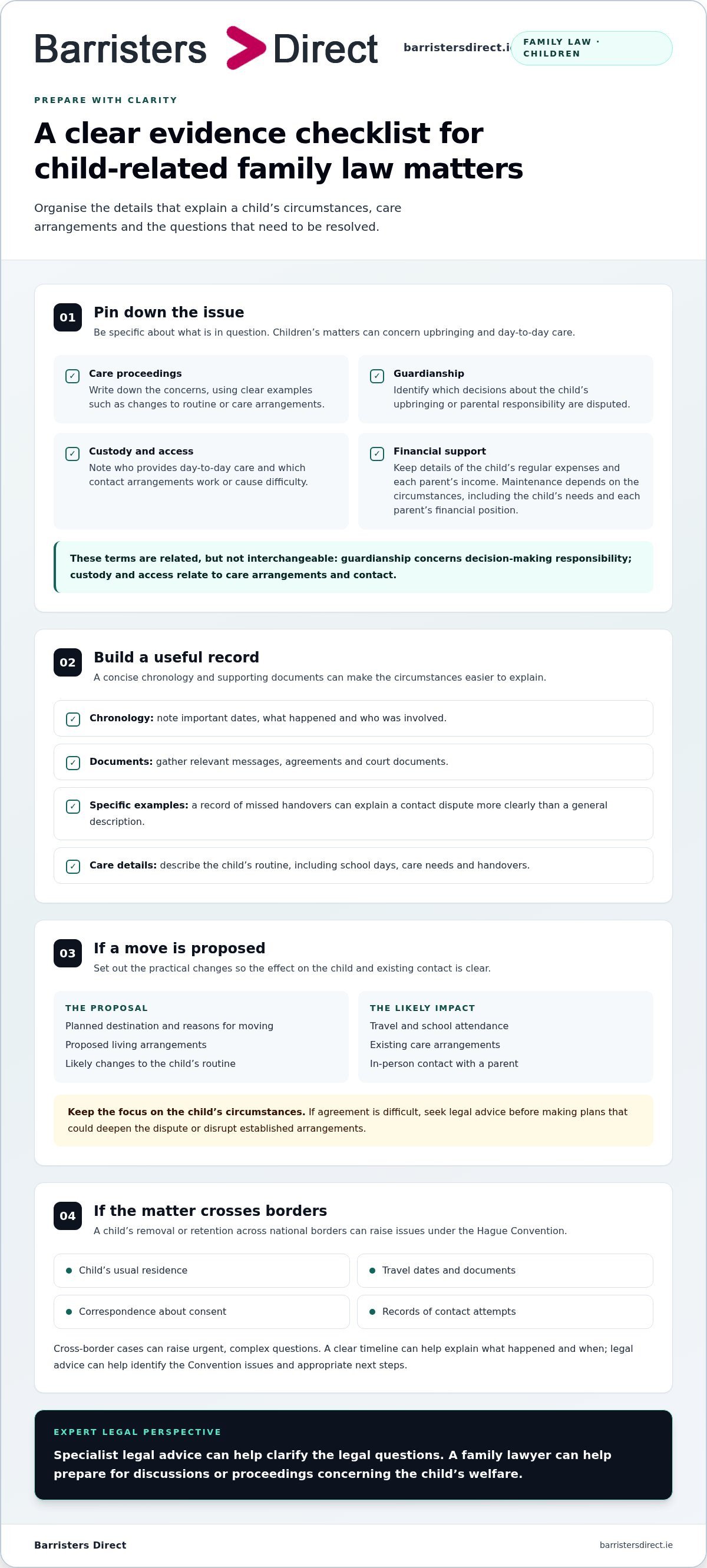
Irish family law matters involving children can concern their upbringing and day-to-day care. Issues may include care proceedings, parental responsibilities, contact and financial support.
For a care matter, organise your concerns into clear examples, such as changes to a child’s routine or care arrangements. Record relevant dates, people involved and communications so you can explain the issues clearly. A family lawyer can help clarify the legal questions and prepare you for discussions or proceedings concerning the child’s welfare.
How is child maintenance calculated in Ireland? Maintenance is financial support for children. The amount depends on the circumstances, including the child’s needs and each parent’s financial position. Keep details of regular expenses and income to support a clear discussion.
The Children’s Court Advocate Pilot is another named development in this area. Its tender submission deadline was 15 September 2025. If you are reading about the pilot, distinguish that tender deadline from the steps and dates relevant to your own family matter.
Before seeking advice, write a short chronology of important events and gather relevant messages, agreements and court documents. For example, a record of missed handovers can explain a contact dispute more clearly than a general description.
Guardianship, custody and access
Guardianship concerns decision-making responsibility for a child, while custody and access relate to care arrangements and contact. These issues can overlap, but they are not interchangeable. Identify which decisions are disputed, who currently provides day-to-day care, and which contact arrangements are working or causing difficulty.
A practical proposal should describe the child’s routine, including school days, care needs and handovers. If parents disagree, specific examples can help keep discussions focused on the child’s circumstances rather than broad accusations.
Relocation and child access
A proposed move can affect where a child lives and how they maintain contact with a parent. Set out the planned destination, reasons for moving, proposed living arrangements and likely changes to the child’s routine. These details help identify the precise disagreement.
For example, consider how travel could affect school attendance, existing care arrangements and in-person contact. If agreement is difficult, seek legal advice before making plans that could deepen the dispute or disrupt established arrangements.
Hague Convention child abduction
A child’s removal or retention across national borders can raise issues under the Hague Convention. Gather details of the child’s usual residence, travel dates, relevant correspondence and any communications about consent. A clear timeline helps explain what happened and when.
Cross-border cases can raise urgent, complex questions. Legal advice can help identify the issues under the Convention and appropriate next steps. Keep records of travel documents and contact attempts, and avoid relying on informal assumptions about where the child should live.
Separation and divorce
In Ireland, separation and divorce involve different decisions about a relationship, finances and family arrangements. The time proceedings take depends on the issues involved and whether the spouses reach agreement.
Separation and divorce requirements
For divorce proceedings, spouses must have lived apart for at least four years during the previous five years when proceedings are instituted, according to the Irish Statute Book. Prepare a clear timeline of living arrangements and gather documents relevant to the relationship and finances.
Separation can involve arrangements made between spouses, while divorce is a formal legal process. If all parties agree on settlement terms with their solicitors, court is not usually necessary for that settlement. Disagreements over finances or care arrangements can add complexity and affect the steps required.
Business interests in separation
A business can make financial arrangements more complex, particularly where ownership, investments, professional practices, inheritance or property are involved. List business interests alongside personal assets, debts and income, then identify the records that explain ownership and value.
For example, jointly owned property or a family business may raise questions about transfers, ongoing income and future viability. Advice from solicitors experienced in family and business law can help address both aspects. Consider business assets as part of the wider financial picture.
Marriage and relationship breakdown
When a marriage breaks down, spouses may need to address finances, housing and arrangements for children, as well as their relationship status. Start by listing the decisions that require agreement, then separate urgent practical matters from longer-term financial discussions.
Assets and pensions form part of the financial arrangements in an Irish divorce or separation. Gather statements and details of property, savings, debts, pensions and business interests to give a full picture. The relevant circumstances and financial information shape discussions about a fair settlement.
Complex cases can also involve wealth planning, inheritance and professional practices. Preparing early makes it easier to identify missing records and focus negotiations on specific questions.
Solicitors and barristers in family law
Solicitors advise clients, manage legal matters and can help negotiate settlements. Barristers provide specialist legal advice and may be instructed for expertise on a particular issue. Their roles differ, and both professions contribute valuable legal skills.
A family lawyer can help clarify the legal questions, explain options and identify a practical next step. If your separation involves complex finances or disagreement about settlement, consider specialist family law advice to understand the issues before deciding how to proceed.
What is covered by the new domestic violence act?
Domestic violence concerns can involve physical, sexual or emotional violence, as well as threats. Ireland’s 2019 Act expanded the definition to include controlling behaviour that may harm someone’s ability to cope with everyday living.
That broader context matters when considering safety, family relationships and a person’s interests. For example, a pattern of behaviour that restricts ordinary daily decisions may be relevant, even if the concern is not a single incident. Legal advice can help explain how the facts relate to the legal issues and what information to organise.
Domestic violence protections
The Courts Service of Ireland describes domestic violence as an act or threat of physical, sexual or emotional violence against a person or a family member. This description can help you identify experiences to discuss with a legal professional, including threats or behaviour affecting everyday life.
Write down incidents in date order, note who was present and keep relevant messages or records. If children or other family members are affected, include the practical impact on their routines and safety. These details help a legal professional understand the circumstances and provide focused advice.
Domestic violence orders
A domestic violence order raises judicial questions that depend on the circumstances and the protection sought. Prepare a clear account of the behaviour, its effect and any immediate concerns. If an order is already in place, keep a copy available and identify the terms you need explained.
Legal advice can clarify the meaning and practical effect of an order in your situation. Keep records of relevant communications and events, and distinguish what you experienced directly from what someone else reported. Clear information helps discussions focus on the actual concerns and next legal steps.
Family law support can also cover adoption, including domestic and international adoption questions. These matters may involve a child’s interests, family relationships and arrangements across borders. Before taking a step, list the questions that need answers and gather documents about the child and proposed arrangements. A legal professional can explain the issues relevant to your circumstances, separately from domestic violence concerns.
Where controlling behaviour is involved, consider how it affects ordinary activities, such as managing household decisions or maintaining family contact. A specific example is clearer than a general description. Note what happened, when it occurred and how it affected daily life. This gives a solicitor a practical basis for assessing the issue.
Domestic violence and adoption are distinct family law matters, but both can affect a child’s welfare and family relationships. Organise records by topic, such as safety concerns, existing court documents and adoption-related correspondence. This makes it easier to explain the issues and receive advice focused on the matter at hand.
Cohabiting couples
For people living together in Ireland, clear records can help explain shared finances, housing and expectations. Start by listing each person’s contributions and the decisions that need agreement.
Cohabitation and non-marital relationships
Living together outside marriage raises practical questions about rent or mortgage payments, household costs, jointly owned property and financial support. Record who pays each expense and whose name appears on relevant documents. For example, a shared account statement may clarify contributions, while a property document identifies its registered owners.
Civil partnerships are a distinct relationship status, so do not assume the same rules apply to every couple. Write down each person’s circumstances, including children, housing and financial commitments. A legal professional can explain which issues apply to your relationship and what further details matter.
Maintenance means financial support for children, a spouse, a cohabitant or a civil partner. If support is being discussed, list regular income, essential outgoings and the needs the proposed payment should address. For example, separate a child’s school costs from general household expenses. This gives both people a concrete basis for discussing maintenance and their preferences.
Cohabitation agreements
A cohabitation agreement can set out the arrangements a couple wants to record, such as contributions to housing costs, shared bills or plans for jointly held property. Before discussing terms, each person can prepare a separate list of priorities. Compare the lists and identify where expectations differ.
Use plain language and specific examples. For instance, a clause about household expenses should distinguish regular bills from one-off purchases. Gather supporting records, such as payment statements and ownership documents, so the agreement reflects the couple’s actual arrangements rather than assumptions.
Prenuptial agreements have a different context. They are not yet enforceable in an Irish court, although they may help explain the parties’ attitudes at the outset of a marriage. Couples considering marriage can record the concerns and financial preferences they want to discuss, then seek advice on how those documents may inform their planning.
Review any agreement when circumstances change. A move, a new shared purchase or a change in financial contributions can make the original wording less useful. Note the change, keep relevant documents and discuss whether the written arrangements still reflect both people’s intentions.
Before signing an agreement, identify what it covers, what it leaves unresolved and how it treats property or support. Each person should understand the wording and its practical effect. If something is unclear, seek legal advice on that specific point before relying on the document.
Family law support services
Family law support can clarify legal questions, organise information and identify practical next steps. Begin by stating the issue clearly, such as a separation agreement, child arrangements or a maintenance concern.
Finding a family law solicitor
When seeking family law support in Ireland, look for a solicitor with relevant family law expertise and experience with your type of issue. Consider whether the meeting arrangements suit your circumstances and whether the solicitor can address the questions you need answered.
Before arranging a meeting, write down the main decision you need help with and any upcoming events. Ask what the first meeting will cover and how the solicitor can assist with your matter. If your circumstances involve several legal issues, explain each one so the advice can address the full picture.
A family lawyer may also provide specialist advice on a specific question. Solicitors and barristers have distinct roles, and both contribute valuable legal expertise. Choose support that fits your immediate need, whether you need advice on your options, help preparing for mediation or assistance understanding documents.
Documents for a first meeting
Bring documents that relate directly to the issue, rather than every paper you own. For a separation, gather existing agreements, relevant court documents, financial records and written communications about arrangements. For a matter involving children, include documents explaining current care or contact arrangements.
For a maintenance discussion, organise information about income, regular outgoings and the costs you need to explain. If property or a business is relevant, bring records showing ownership or financial interests. A short timeline can connect the documents: note key events, decisions and questions that remain unresolved.
Use a simple folder with sections for correspondence, finances and legal documents. Mark any document you do not understand and write a question beside it. This makes it easier to explain what you need from the meeting and avoid overlooking an important issue.
Mediation may help people discuss disputed arrangements and work towards agreement. Before a session, identify the points you agree on, the matters still in dispute and practical options you want considered. For example, list possible handover arrangements separately from disagreements about longer-term care. Focus on specific decisions, not assumptions about the other person’s intentions.
The Law Society of Ireland advises people with legal issues to speak with a solicitor who has the skills to help. If you need focused advice on a family law issue, arrange a family law consultation to discuss the legal questions and a clear path forward.
Where a District Court order is involved, the Courts Service of Ireland provides information about time limits and the process for appealing District Court orders. Keep that information with the order and note any questions it raises for your legal adviser. This helps focus the discussion on the appeal process and relevant time limits, rather than unrelated paperwork. If you are unsure how the information applies to your circumstances, raise that when seeking family law support.
Barristers Direct: Commercial Dispute Resolution
Barristers Direct offers Commercial Dispute Resolution for disputes involving business interests. This may be relevant when a relationship breakdown also affects a company or partnership. If your matter is limited to children, maintenance or personal arrangements, a commercial dispute consultation may not be the right fit.
For a dispute involving a business, Barristers Direct enables individuals and companies in Ireland to arrange a consultation with a barrister experienced in the relevant area. The fixed-fee initial consultation provides expert advice and a clear path forward, helping you understand the legal issues and options before deciding what to do next.
For a business dispute, organise the relevant agreements, correspondence and records before seeking advice. Contact Barristers Direct to discuss Commercial Dispute Resolution if it fits your circumstances.
Choose a clear next step
Before making a significant decision, identify the legal question you need answered and the outcome you are seeking. This focus can make an initial discussion more useful, whether you need to understand your options, assess a proposed agreement or plan how to approach a dispute.
A family lawyer can provide advice tailored to your circumstances and explain the practical implications of different choices. Barristers Direct offers a Family Law Consultation, where you can seek specialist advice and a clearer path forward. Bring the key documents and questions relating to your situation so the discussion can focus on the issues that matter to you.
If you are ready to discuss your family law matter, contact Barristers Direct about a Family Law Consultation. A considered first step can help you approach what comes next with greater confidence.
Frequently Asked Questions
How long do divorce proceedings take place?
There is no single timeline for divorce proceedings in Ireland. The length depends on how quickly the required information is prepared and whether spouses agree on financial and family arrangements. The Irish Statute Book states that, when proceedings are instituted, spouses must have lived apart for at least four years during the previous five years. A solicitor or barrister can assess the steps involved once the outstanding issues and available documents are clear.
Will I have to go to court?
Not necessarily. If both spouses agree on settlement terms with their solicitors, court is not usually needed to settle those matters. If important issues remain unresolved, a court may need to decide them, and attendance can form part of that process. Prepare a list of agreed points and disputes before seeking advice, so the discussion can focus on what still needs resolution.
Disclaimer
_This article does not constitute legal advice. Barristers Direct does not provide legal advice. To obtain legal advice, you should contact a legal practitioner._